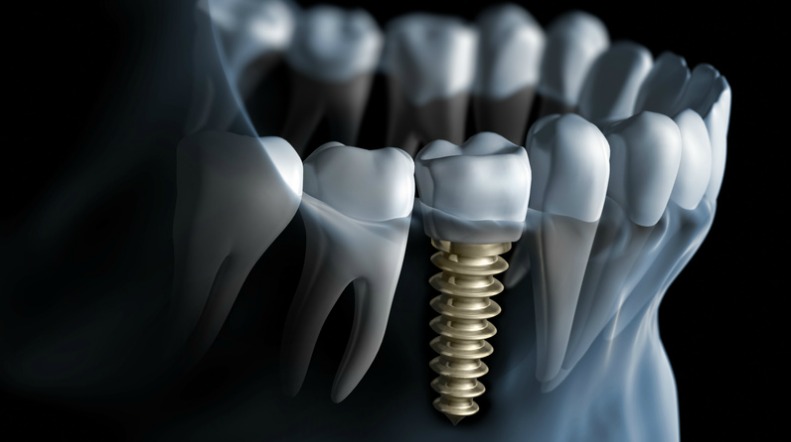





Osteoporosis is a disease that causes bone thinning, primarily affecting older adults. Among the medications used to slow this process are bisphosphonates, which, however, can cause osteonecrosis of the jawbones as a side effect, i.e., the death of bone tissue due to insufficient blood supply.
Many believe these medications contraindicate implant placement, but the risk is only present in a very limited number of cases. Studies published in international medical journals, including the Journal of Oral Implantology, clarify that there are no absolute contraindications but only relative ones for patients taking bisphosphonates for osteoporosis.
The risks depend on the dosage. For example, bisphosphonates are also used in oncology, where the doses are dozens of times higher than those typically used for osteoporosis treatment.
Therefore, certain risk factors must be considered, including the type of treatment (oral or intravenous), the dosage, and the duration of the therapy, which could pose challenges to the success of the procedure. If a patient with osteoporosis is taking bisphosphonates, they should inform their doctor of these parameters and undergo a thorough consultation before proceeding with implantology.
Generally, the risk of developing osteonecrosis increases only when high doses of these medications are used. This is also supported by a recent study published in the scientific journal Journal of Bone and Mineral Research.