




A severe toothache is agonising. Whether it is a throbbing, continuous, or sharp pain, suffering from it makes everyday life hard to manage. The possible causes of toothache are varied. Alongside nerve inflammation (pulpitis), tooth decay, exposed tooth necks, gingivitis, or sensitive teeth can also trigger this frustrating pain.

Freesmile offers emergency dental care for all patients in Rome who suspect they are suffering from pulpitis.
Before the situation worsens, we highly recommend calling us on 06 3333377 or filling out the form on this page to book a no-obligation consultation.
You can reach us directly at our clinic at via PAOLO MERCURI 6 ROME, Monday to Friday from 09:00 to 19:00.
Let us return to pulpitis, its causes, and how to identify its symptoms:
The causes of toothache
Nerve inflammation
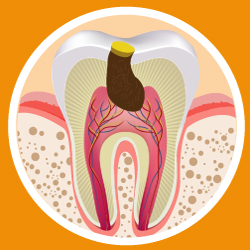
Pulpitis is the main cause of severe toothache. The dental pulp, a soft tissue, is protected under the hard shell of enamel and dentine inside the tooth, extending to the apex of the tooth roots. It consists of connective tissue containing blood vessels, lymphatic vessels, and nerves. Inflammation of the dental pulp (pulpitis) can have various causes and disastrous consequences for the affected tooth.
Causes of nerve inflammation
Although tooth enamel is the hardest substance in the human body, an untreated carious infection can damage it deeply. The resulting defects or cracks can reach the inside of the tooth, allowing bacteria to trigger inflammation. A tooth fracture, maxillary sinus pathologies, or mechanical, chemical, or thermal stimuli during dental treatment can also trigger pulpitis. The dental nerve reacts to the invasion of bacteria or other stimuli with a natural defensive reaction: inflammation. Blood flow increases, and defence cells are continually transported to the dental nerve.
What symptoms does dental nerve inflammation cause?
There are two phases of pulpitis: reversible and irreversible. Both associate with pain.
Reversible pulpitis
In reversible pulpitis, the inflammation is still in its early stages. It presents as short-term, intermittent pain alternating with pain-free phases. External stimuli like sweet foods, heat, or cold trigger the pain. At this stage, your dentist can still successfully treat the inflammation.
Irreversible pulpitis
If nerve inflammation (pulpitis) is detected too late or ignored, irreversible pulpitis can develop. Intense, prolonged tooth pain characterises this stage, which can radiate throughout the upper or lower jaw. Increased pressure inside the tooth from inflammation and constant irritation causes the compromised nerves and blood vessels to die. In the advanced phase, pulp necrosis occurs; the tissue inside the tooth decomposes, and decay sets in. Bacteria can spread from the pulp through the root apex into the surrounding tissue and bone, eventually affecting the rest of the body. Lymph nodes and the cheek swell, forming a gum abscess. If pus forms in the pulp, it can spread into the mouth, causing an unpleasant taste and bad breath. When the dental nerve (pulp) dies, the pain subsides and disappears entirely. However, this does not eliminate the infection. Because anaerobic bacteria can spread quickly through the bloodstream, you risk systemic inflammation. If these microorganisms attack your heart valves or the inside of your heart, it can cause heart muscle inflammation (endocarditis), which usually leads to death if left untreated.
Important: what should you do?
A severe toothache is always a reason to visit the dentist as soon as possible. It can be a symptom of a dental disease with serious consequences. Avoiding pulpitis is essential. Prevention is always better than cure.
How does the dentist treat pulpitis?
For reversible pulpitis, the dentist will find and remove the cause. If decay causes the damage, we fill or restore the tooth, and anti-inflammatory medications promote healing. A tooth with irreversible pulpitis can usually only be saved with a root canal treatment. This involves opening the inflamed tooth, removing all the pulp from the inside, and flushing the root canals to make them germ-free. We then fill the root canals to the tip with a special material to leave no space for germs, sealing the tooth tightly. After removing the inflammation, you may need a crown if too much dentine was removed and the tooth’s stability is at risk. We must completely eliminate inflammatory focuses to prevent them from spreading to other teeth. If symptoms persist or the inflammation is chronic, the dentist can perform an apicectomy, surgically removing the root apex of the tooth. If this treatment also fails, extracting the tooth is the only remaining option.
Tooth decay or tooth fracture
Tooth decay is one of the most common dental diseases and can cause severe pain. The depth of the decay determines the pain’s intensity. We can often simply smooth out a very small cavity. Decay that has already reached the nerve weakens the tooth mechanically. Only targeted therapy can restore the tooth’s stability. You can learn more in our articles dedicated to specific treatments and our service quality description. Remember: the earlier we diagnose tooth decay, the more gently we can remove it and preserve the healthy part of the tooth.
Other causes of toothache
Periodontitis and tooth root inflammation
Exposed tooth necks are often the result of progressive periodontitis. They are sensitive to heat, cold, and sweets due to the exposed dentine. This often leads to a particularly painful inflammation of the tooth root.
Gingivitis, wisdom teeth, or other causes
Toothache does not always come from the tooth itself. Gum inflammation can be equally painful and is often caused by bacterial plaque. Early diagnosis and prompt treatment can prevent this severe pain. Delayed eruption of wisdom teeth is another reason for mouth pain. Irregularly grown teeth, braces that are too tight in teenagers, or poorly fitted dentures can also cause pain in the teeth or jaws. Pressure on the teeth, which often lingers painfully, also stems from psychological stress. Grinding your teeth at night is an expression of this phenomenon.
Possible further causes of a toothache treated late or left untreated
Oral pathogens can enter the bloodstream through inflammatory focuses and infect other regions of the body. Respiratory diseases, heart valve disorders, endocarditis (lethal), rheumatism, or an increased risk of heart attack and stroke often occur alongside periodontitis.
Toothache: what to do and what to take
A severe toothache always warrants visiting the dentist as soon as possible. It can be a symptom of dental disease with serious consequences. Preventing pulpitis is key.
Painkillers
Painkillers are often the first choice for dental neuralgia, which you can ease with over-the-counter medications until you see the dentist. Anti-inflammatory drugs, such as ibuprofen and paracetamol, often help. Acetylsalicylic acid (aspirin) has anti-inflammatory properties but slows blood clotting for several days. These remedies are not a long-term solution; they only temporarily mask the real causes of the toothache, which can worsen with prolonged use of these drugs. Here is a dramatic but possible progression: untreated tooth decay leads to pulpitis, which creates an inflammatory bone cyst. The pus eats through the bone to create an abscess (swollen cheek). Bacteria travel through the bloodstream to the heart, attaching to the tissue and inflaming the heart and its valves. This inflammation can lead to death if undetected. While this scenario is not the most likely, you can easily avoid jaw inflammation with proper treatment from a team of expert dentists.
We help you understand your X-rays so you can communicate better with your dentist.
Toothache: natural remedies
Several natural home remedies for toothache can temporarily reduce throbbing pain. Ice packs: If the mouth pain is severe, cooling the area with ice can provide relief.
Rinsing with herbal teas or salt water
The anti-inflammatory effects of various herbal teas are well known. If you have a toothache, rinsing with chamomile, sage, or peppermint can have an analgesic effect. Another home remedy is rinsing your mouth with a highly concentrated, lukewarm salt water solution. Repeatedly swishing the antiseptic solution around your mouth can temporarily ease the pain.
Cloves or clove oil
Cloves are one of the most widely used home remedies for toothaches. The oil or dried flower bud has an anaesthetic, anti-inflammatory, and disinfectant effect. Other common temporary aids include onion, tea tree oil, or alcohol.
Many of these natural remedies can reduce toothache to some extent, but a visit to the dentist remains unavoidable.
Many of these natural remedies can reduce toothache to some extent, but a visit to the dentist remains unavoidable.
In short, if you have a toothache, book an appointment with your dentist IMMEDIATELY. If you feel any type of pain in your mouth, do not hesitate to book an appointment at our dental practice as soon as possible. The earlier we diagnose the clinical picture, the less intervention you will need.
We want your teeth to stay healthy for life. Call us on 06 33 33 377 if you have questions or want to book an appointment. In an emergency, our centre is available from Monday to Friday, between 09:00 and 19:30.